Round
Round  Marquise
  Asscher
  Princess
  Cushion
  Pear
Pear  Heart
Heart  Emerald
  Oval
Oval  Radiant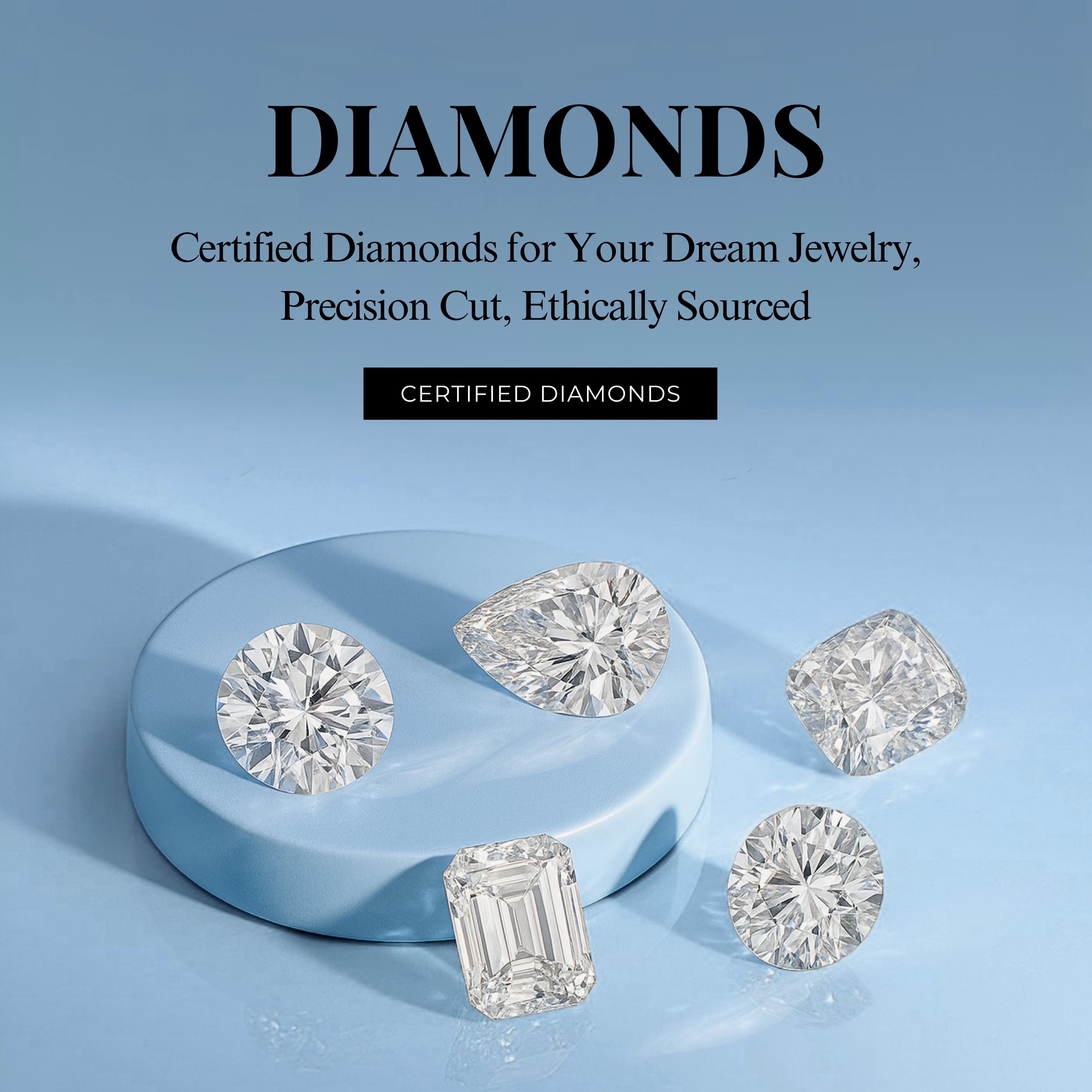
Article: How to Choose the Perfect Engagement Ring Metal for Your Diamond
How to Choose the Perfect Engagement Ring Metal for Your Diamond
The engagement ring metal you choose will quietly outlive almost every other decision you make about the ring. A diamond is chosen once and admired forever. The band that holds it, however, is worn against skin every day for decades, catching light at dinner, taking the knock of a car door, softening at the edges as the years pass. It is the part of the ring that ages with you.
Most guides treat this choice as a footnote to the stone. It deserves more. The right engagement ring metal flatters the diamond, suits the hand that wears it, and asks little of you in return. The wrong one demands constant upkeep and never quite looks the way you imagined.
Also Read: Engagement Ring Styles Trending This Year
What follows is how to choose well.
Why Your Engagement Ring Metal Matters More Than the Setting Style
Setting styles come and go. A solitaire, a bezel, a hidden halo: these are questions of taste, and taste changes. The engagement ring metal is a longer commitment, because it governs three things that cannot be adjusted afterwards.
The first is how your diamond reads to the eye. Metal reflects into a stone, and a warm band will lend warmth to the diamond sitting in it. The second is durability, which determines how securely your prongs hold the center stone across twenty years of wear. The third is maintenance, which is the cost nobody quotes you at the counter.
Choose with all three in mind and the decision becomes far simpler than the showroom makes it feel.
Platinum vs White Gold: The Question Every Couple Asks
These two look nearly identical on the hand. That is the whole difficulty.
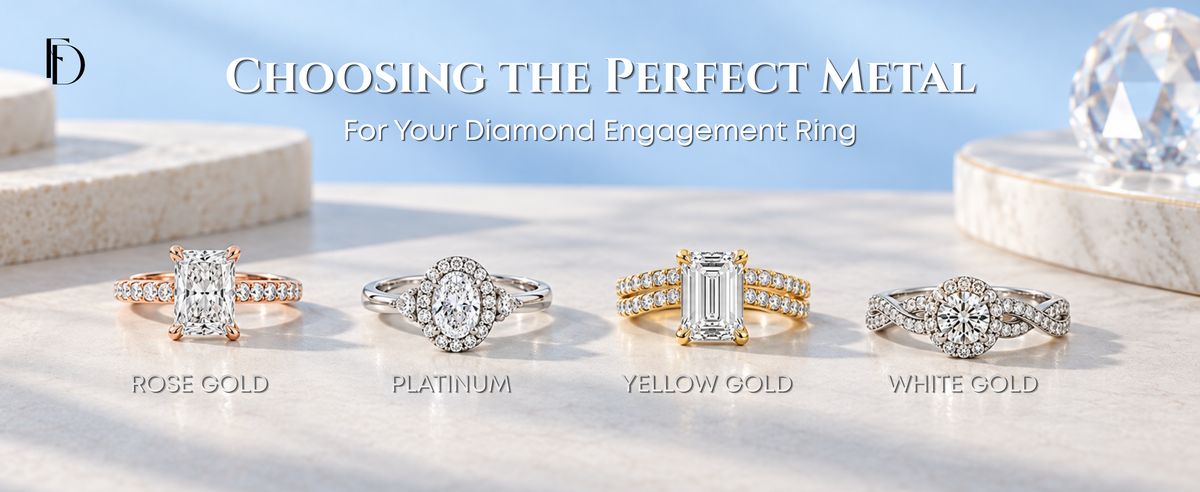
Platinum is naturally white. It is denser and stronger than gold, which makes platinum prongs less likely to break and particularly well suited to holding a diamond securely. It is roughly 66% heavier than white gold, and that density gives a platinum ring a substantial, deliberate feel on the finger. Over time it develops a soft patina rather than losing material, and a jeweler can polish it back to a high shine.
White gold is gold alloyed with white metals and then finished with rhodium plating to achieve its bright, cool sheen. That plating wears away over the years and must be refreshed by a jeweler, a recurring cost worth factoring in. In exchange, white gold is meaningfully less expensive at the point of purchase, which allows more of your budget to sit in the stone.
The honest summary: platinum costs more upfront and asks less of you afterwards. White gold costs less upfront and asks a little more.
Yellow and Rose Gold: The Case for Warmth
Cool metals have dominated for a generation, but warm gold has quietly returned, and for good reason.
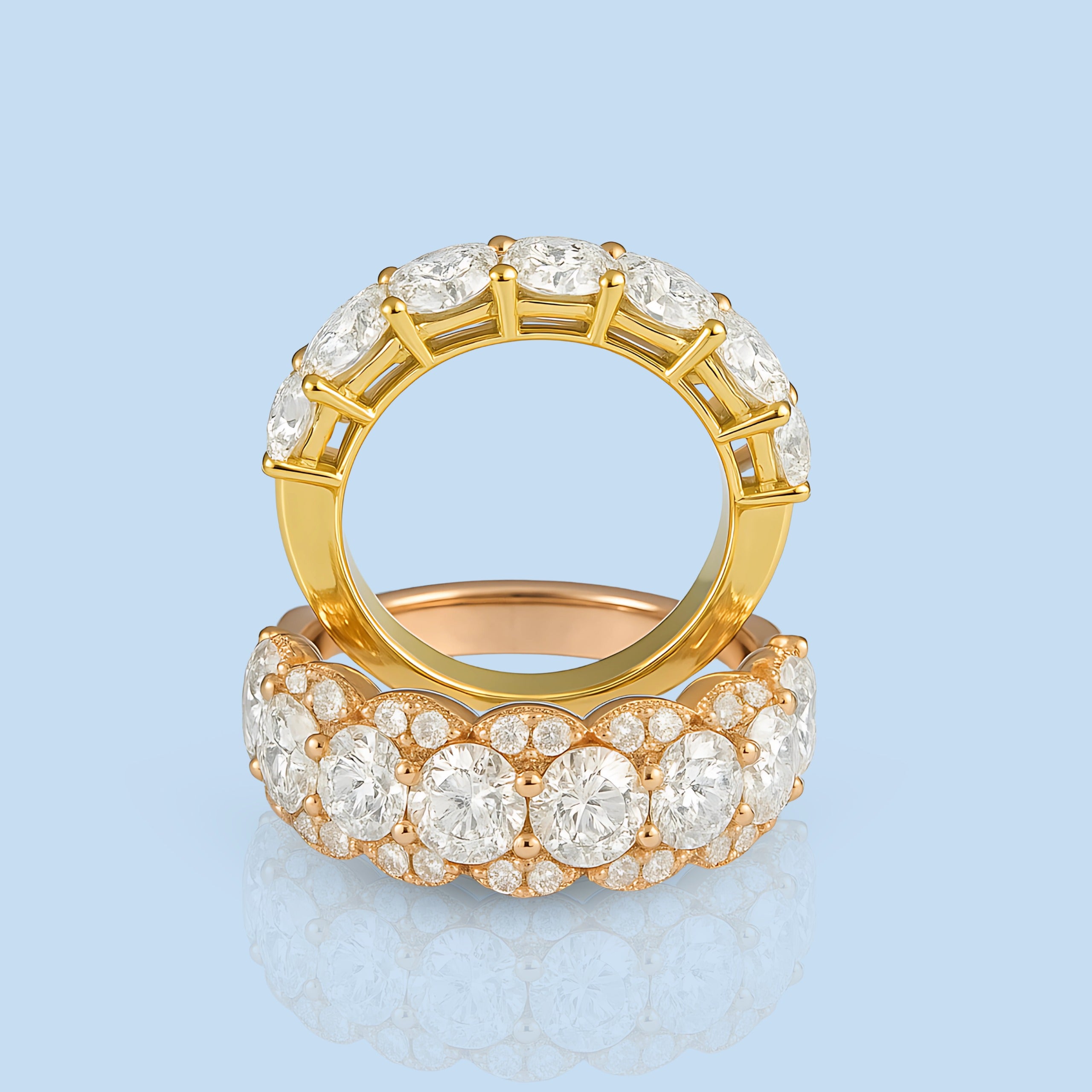
Yellow gold is the oldest choice in the tra in dition and remains the easiest to live with. It requires no plating, holds its color indefinitely, and needs nothing more than occasional cleaning. Against a diamond it creates contrast rather than continuity, and that contrast flatters in a way most people do not anticipate until they try it on.
Rose gold takes its blush from copper in the alloy, which also makes it the most scratch-resistant of the golds. It reads romantic and slightly vintage, and it sits beautifully against warm and olive skin tones.
There is a quiet advantage to warm metals that few jewelers mention. Because a yellow or rose band lends its own color to the stone, a diamond graded slightly lower on the color scale will look entirely at home in it. The engagement ring metal does the work that a higher color grade would otherwise have to pay for.
14k or 18k: Choosing Your Karat With Intention
Karat measures purity, not quality, and the difference is more consequential than most buyers realize.
14k gold is approximately 58.3% pure gold, which makes it harder and more scratch-resistant, and it remains the most popular choice for engagement rings worn every day in the US. 18k gold is 75% pure, giving a richer and deeper color at the cost of being softer and more prone to surface scratching.
If you work with your hands, exercise in your ring, or simply know you will never take it off, 14k is the more sensible engagement ring metal. If you want the deepest, most saturated gold tone and you are gentle with jewelery, 18k rewards you with a color 14k cannot reach.
Matching the Engagement Ring Metal to Your Diamond
Here the decision becomes precise rather than aesthetic.
A colorless or near-colorless diamond, whether natural or lab-grown, looks its brightest in a white metal. Platinum or white gold keeps the stone reading icy and clean, with nothing warm reflecting into the pavilion. If you have paid for a high color grade, a white setting protects that investment.
A diamond that carries a faint warmth is better served by yellow or rose gold, where the metal harmonizes with the tint instead of exposing it. This is not a compromise. It is a deliberate pairing, and it is how experienced buyers stretch a budget without any visible loss.
There is also a third path worth knowing: a warm band with platinum or white gold prongs. The ring reads warm, the stone reads white, and you keep both.
For colored gemstone center stones the logic shifts again, since the engagement ring metal must flatter a hue rather than an absence of one. That deserves its own conversation.
A Simple Framework: Let Your Life Choose the Metal
Set the showroom aside and answer three questions honestly. Your engagement ring metal will largely choose itself.
How hard are you on your hands? Active hands, frequent lifting, or work with tools point firmly toward platinum or 14k gold.
How do you feel about maintenance? If returning to a jeweler every few years for replating sounds tedious, choose platinum or yellow gold and be done with it.
Where do you want the budget to sit? If the stone matters most to you, white gold releases meaningful funds toward a larger or finer diamond. If longevity matters most, platinum is the better allocation.
Skin sensitivity is worth adding as a fourth consideration. Platinum is hypoallergenic, as is high-karat yellow gold. Some white gold alloys contain nickel, which a small number of people react to.
Conclusion
The perfect engagement ring metal is not the rarest or the most expensive one. It is the one that flatters your stone, suits your hands, and asks of you only what you are willing to give it for the next fifty years. Decide on that basis and the choice becomes clear.
Every ring in our collection is crafted to hold its stone, and its beauty, for a lifetime.
Explore our Engagement Ring Collection at Fine Diamond.